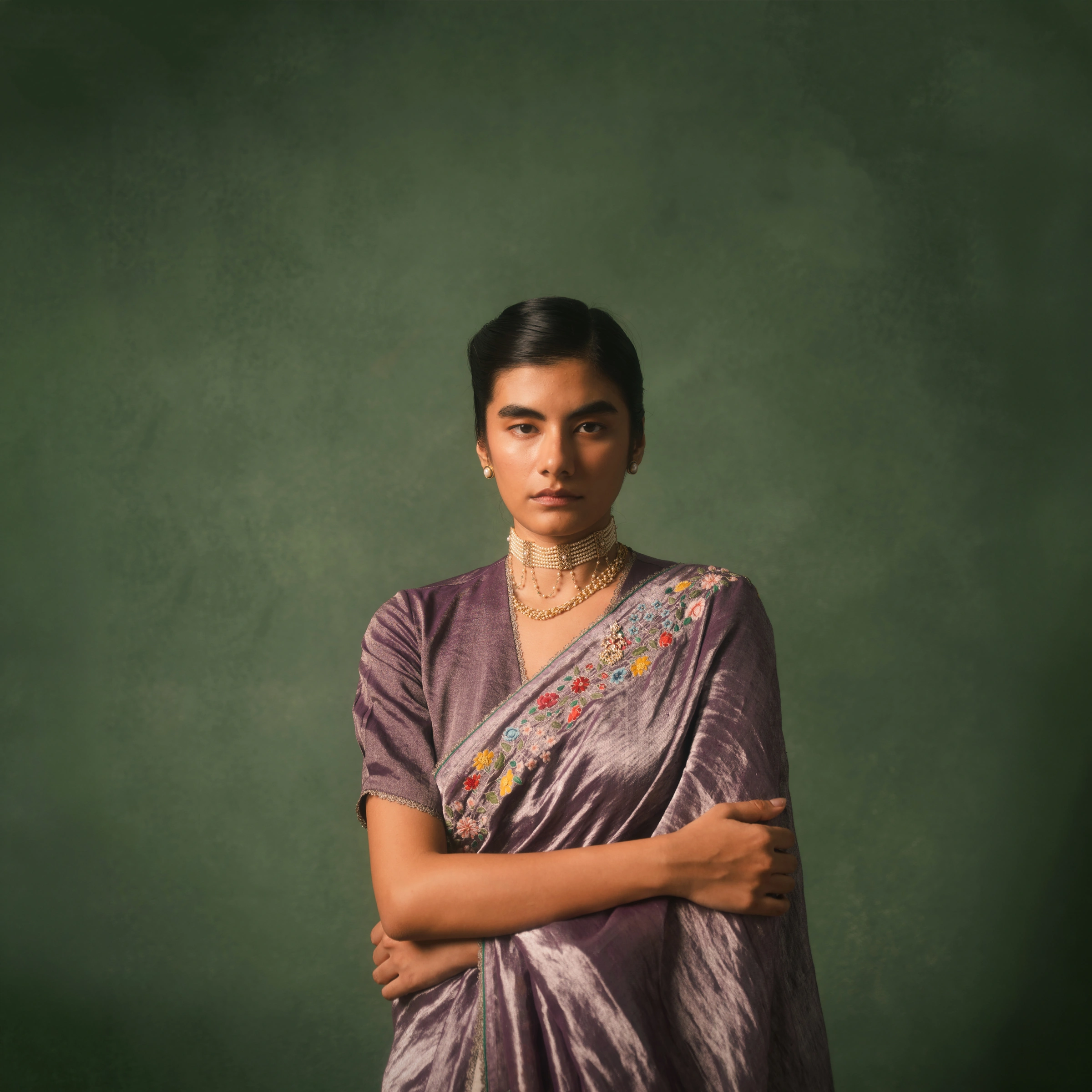
Sarmast
ANAVILA | FESTIVE 2025
Sarmast was developed as a Hyderabad-inspired collection within a 35-day timeline, exploring wajd, a state of poetic intoxication, through the Deccan, its architecture and the world of Nizami extravagance. Research and creative writing looked towards the palaces and elaborate gatherings of Hyderabad’s aristocracy, including the costume balls associated with the Salar Jung family. This translated into floral embroideries, woven textiles and rich surface development. The Durru sari drew from the floral arrangements and motifs of Indo-European Deccan architecture, first developed in zari and later carried into organza and khadi silk across three collections. Two brocades were developed for Sarmast: a rust revival with newly drawn butis and borders, and a deep indigo woven with interpretations of French tapestries from the hyderabad court. The ziba lehenga set offered one of the few opportunities to work on print, while the Gota Kinari sari developed during Aamod was revisited in lace for Sarmast and became an immediate success. Working within the compressed timeline meant research, creative writing, textile development and production had to move together, with the textile often becoming the point where an idea found its final form.
.webp)
.webp)
.webp)
.webp)
.webp)
.webp)
.webp)
.webp)
.webp)
.webp)
.webp)
.webp)
.webp)
.webp)
.webp)
.webp)
.webp)
.webp)
.webp)
.webp)
.webp)
.webp)
.webp)
.webp)
.webp)
.webp)
.webp)
.webp)
.webp)
.webp)
.webp)
.webp)
.webp)
.webp)
.webp)
.webp)
.webp)
.webp)
.webp)
.webp)
.webp)
.webp)
.webp)
.webp)
.webp)
.webp)
.webp)
.webp)
.webp)
.webp)
.webp)
.webp)